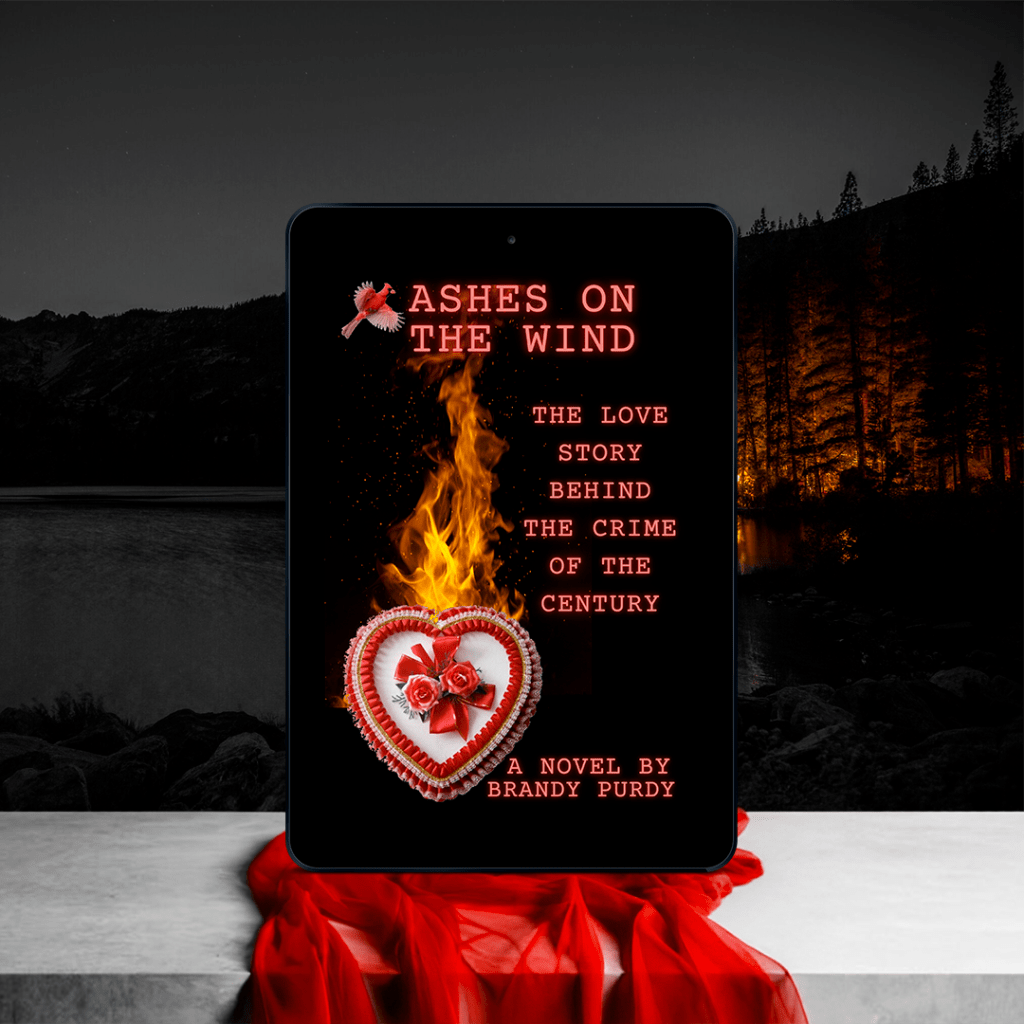
Today, author Brandy Purdy is guesting. She’s talking about her latest release Ashes on the Wind, a dark, historical LGBTQ+ romantic suspense based on a true crime event. Don’t forget to enter the Rafffelcopter giveaway.
“The love story behind the Crime of the Century.”
****


The Story Behind the Novel: An Interview With Brandy Purdy
Originally posted on April 19, 2024 by Loeb and Leopold
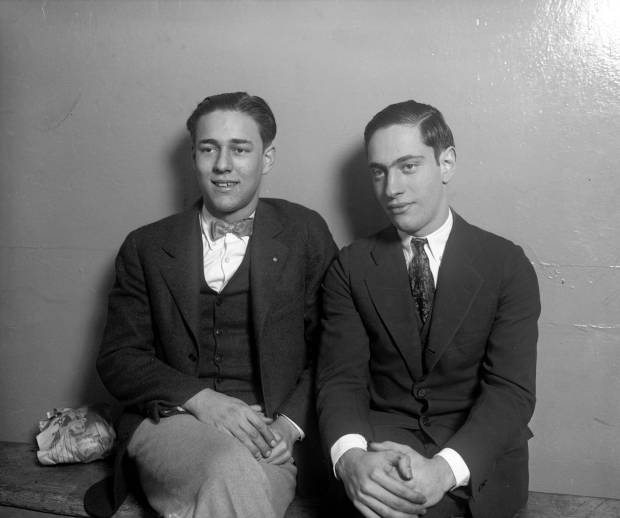
Just in time for the 100th anniversary of the murder of Bobby Franks comes a new novel by author Brandy Purdy: Ashes on the Wind: The Love Story Behind The Crime of the Century. This, Purdy’s 10th novel, focuses on the relationship between the killer duo of Leopold and Loeb, how it began, grew and changed over the years. Ashes can be ordered from Amazon in either paperback or ebook format here.
I was happy to talk with Purdy about her interest in the case, her research, and to dive into some details of the novel itself.
ER: Do you remember when you first heard about the case and what interested you about it?
BP: It was in A Pictorial History of American Crime by Allen Churchill. My mother used to take me to the library when I was a little girl and they kept all the coffee table size books in one area, and I found that book and I was just fascinated by it, I loved seeing all the vintage illustrations. Leopold and Loeb was one of the cases in that book that just stuck with me and that I would look for more information about throughout the years as I got older and understood better. It was the relationship between these two young men that always intrigued me the most as well as their psychological issues.
ER: Have you read or watched other fictional adaptations of the story before?
BP: Oh yes, I try to keep up with everything, I love seeing how different novelists and filmmakers and playwrights are inspired by the story. The movie Swoon was always my favorite, I used to want to rent it every time we went to the video store, and it was one of the first DVDs I bought. And I love listening to the soundtrack of Thrill Me.
ER: What gaps did you see in those other stories that you wanted to fill?
BP: Most books tend to focus on the crime and the trial. I wanted to focus on the relationship, how it began and developed through the years. And the prison years, their lives didn’t end when they went to prison just changed drastically. And it’s the one part of their story I wish we had more information about especially in regards to Richard Loeb.
ER: Can you tell me about your research process for this project?
BP: I love doing research. Even though I write historical fiction and put my own interpretation and creative spin on things, I love having the opportunity to research and explore stories that fascinate me. I read most of the nonfiction books that were available at the time I started writing, and I did some newspaper research, though admittedly not as much as I would have liked to, and a little archival research that I was able to do by mail or online since I can’t travel. My interviewer here, Erik Rebain was also immensely helpful to me in so many ways.
ER: Your book is a work of fiction, can you discuss the line you walked between historical accuracy and creative license?
BP: I always start with a factual framework and embroider upon that as I’m inspired to as I go along. And sometimes the decision to use creative license is a more practical one, for example I try to avoid multiple characters having the same first name, like in this novel Leopold and Loeb’s friend Dick Rubel is called Richie, and sometimes I reassign actions or dialogue if I didn’t develop the actual speaker / performer as a character, or as in the case of the trial in my novel to streamline the psychiatric testimony.
ER: Did the book surprise you at all once you started working on it?
BP: Oh yes, it definitely surprised me! I’m trying to avoid giving any spoilers here, but one character who I wasn’t even sure would be more than a brief mention, evolved in a very unique way and changed the course of the rest of the story. It completely surprised me, I didn’t see it coming till it happened. It made more work for me, but I wasn’t sorry a bit.
My characterization of Richard Loeb also surprised me a great deal throughout the novel.
ER: You include people who haven’t been represented in fiction about this case before, can you talk about widening the narrative around this story?
BP: Yes, when I write a novel, I don’t like to be cookie cutter, I like to try to give readers something different they may not have experienced before. I wanted to go wider and deeper than just the criminal activity and the trial. And it’s always important to me when I write a novel about a murder that the victim or victims be more than just names on the page, like when I wrote The Ripper’s Wife, it was important to me to develop each of the Jack the Ripper victims as an individual person. So while the relationships as depicted in my novel might be deeper or different than they were in real life, I hope I was able to give back life and personality at least in the pages of a novel so readers see a person not a corpse.
ER: Nathan Leopold is the narrator for your book. Can you describe what it was like to write from his perspective?
BP: A little intimidating at first, because of his genius, I had to make myself focus more on his emotions than on his accomplishments. If I let myself think too much about philosophy and languages I would get bogged down, a little scared and overwhelmed. But I did become more interested in birds because of this book, I have bird feeders now and I love the cardinals that hang out around the camellia tree by my front porch, I love watching them they’re like a little soap opera.
My Leopold is an unreliable narrator, which is my favorite kind to write, so ultimately it’s up to the readers to decide if or when to believe him.
ER: Not to give away too much, but it seems like some of the characters in your book were able to grow and change, while others got stuck repeating patterns. Can you talk a bit about that?
BP: Yes, that was one of the things that surprised me while I was writing this novel. Someone grew and revealed a greater emotional depth than I originally expected them to, while someone else got stuck, very stuck. Sometimes bad habits or behaviors learned through childhood experiences or relationships can leave people stuck in an emotional rut, doomed to make the same mistakes, even when there’s an awareness of this and even sadness or frustration. And sometimes obsession blinds a person to everything else except the object of that obsession.
ER: The relationship between Leopold and Loeb is central to the narrative of your story, can you describe how you see this relationship and how it evolved over time?
BP: I think at first, at least on the surface, it looked like a good thing, they had enough similarities, and being in college at such a young age they were basically in the same boat, but the cracks started appearing almost at once and widening. In my novel, Leopold sees Loeb as a fantasy come to life. But that fantasy figure and the real Richard Loeb are two very different personalities. And that’s a very big problem, and an even bigger one when Leopold just can’t let go of the fantasy.
ER: Your characters are all very distinct, did you have a favorite character you enjoyed writing dialogue for in this book?
BP: Yes, Loeb when I first read about his manner of speaking and suddenly changing subjects it reminded me of those old screwball comedies from the 1930s. So I visualized him, at least in the early years of my novel, as a sort of male version of Carole Lombard in My Man Godfrey.
There was another character I also enjoyed very much, but I’m afraid of saying too much and giving spoilers, so let me just say this person represented hope and what might have been. I know from personal experience what it feels like to live without hope, or at least to have that feeling, and I found this character very comforting, inspiring and peaceful but in a bittersweet way.
ER: Do you remember what it was that made you interested in Melvin Wolf and sparked him becoming such a central character?
BP: Of all the ABCD crimes, he stood out to my mind as the most interesting. Originally he was not intended to be a character, but it was the combination of the mystery surrounding his death, the family clothing business, his interest in charity and theater that just set the creative wheels of my mind turning. I still wish I knew more about him and what actually happened to him, and I became very fond of him while I was creating this character. I unexpectedly had the chance to talk to one of his descendants, and while very little is actually known about Melvin, she told me it was a belief passed down in the family that he was gay. She also told me there had been other gay men in the family who had been open and accepted in eras where that was generally not the case. I liked the idea of creating this mature and confident young man who was comfortable in his own skin, in being himself, and loved and supported by his family, to contrast the childishness, insecurities, and dysfunction of Leopold and Loeb, and the embarrassment and shame they felt whenever there were rumors about their relationship.
ER: What were the best and the worst things about writing this book?
BP: The best thing was definitely getting to delve so deeply into the subject. I got to explore and learn so much, not just about Leopold and Loeb, but about the times they lived in, the pop culture of the period, psychology, sexuality, just so many things.
The worst thing was formatting the book, that was an absolute nightmare. So traumatic I’m not sure I will ever write another! And, on a more personal level, watching my father change and disappear into rapid onset dementia. But the hallucinations and delusions he experienced did help me create the hallucinatory scenes that Nathan Leopold experiences in my novel. Not in terms of the subject matter, my father’s were completely different, but the vividness and confusion. Ultimately, it’s up to the reader to decide what exactly Leopold’s hallucinations are, whether they are dreams, supernatural, psychiatric, or a manifestation of the conscience he rejects and claims not to have. Fun fact, I always try to include a ghost story in each of my novels because it was a book of ghost stories that first inspired my interest in history. So to anyone who reads any of my books, happy ghost hunting!
ER: Thank you to Ms. Purdy for talking with me about her new book!
****

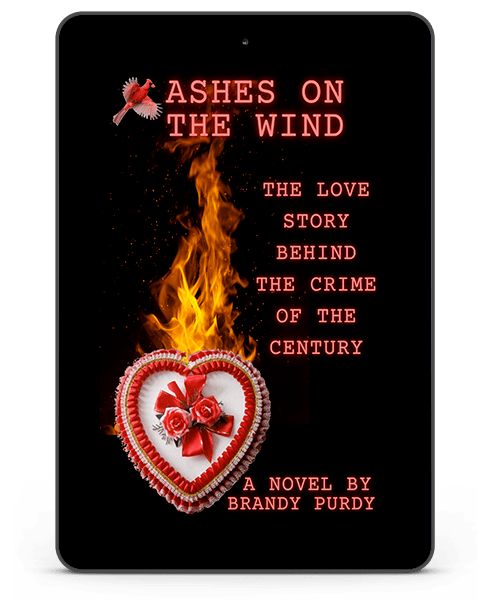
Title: Ashes on the Wind: The Love Story Behind the Crime of the Century
Series: N/A
Author: Brandy Purdy
Genre: Dark Historical LGBTQ Romantic Suspense, True Crime
Blurb: Nathan “Babe” Leopold was a socially awkward genius who used arrogance as a shield. He cultivated a philosophy of absolute selfishness cherry-picked from his reading of Nietzsche and indulged himself with vivid sexual fantasies about kings and slaves.
Richard “Dickie” Loeb was the brightest of the bright young things, a social butterfly as fragile as glass inside, hiding his insecurities behind a dazzling smile and a mouthful of lies. He found escape in thrilling tales and fantasies of crime.
They were two brilliant and privileged boys, each harboring secrets it would have been social suicide to reveal in their 1920s world.
When Babe met Dickie, it was like his favorite fantasy had stepped out of his dreams into real life.
When Dickie met Babe, he thought he had found the accomplice who would help make his criminal dreams come true.
Dickie was willing to give Babe what he wanted, if Babe would give him what he wanted. Quid pro quo. Until Dickie wanted something more, leaving Babe desperate and willing to do anything to hold onto his dream. Even if it led down a dark path to the Crime of the Century and infamy as the thrill killers Leopold and Loeb.
Reviews:
“I have read all but one of Brandy Purdy’s novels, since 2010 and I have enjoyed them all including Ashes on the Wind. Brandy spends extensive time doing research and has the knack for telling a great story.” —CelticLady Reviews
Available at:
Amazon | Apple | B&N | Kobo | Smashwords

Before I went to bed, I sent a telegram to Dickie, asking him to forgive and forget what I had said, I was on my way home to make amends.
His reply was on my breakfast tray the next morning beside a platter of sliced pineapple: “I HOPE THE BOAT SINKS!”
Clearly my adored one was still upset.
It was Len, looking as sour as ever, who met my boat. Standing beside the silver limousine in his smart gray uniform, he presented me with a note from Dickie telling me to meet him at the castle. I immediately leapt into the car and ordered Len to take me to LaSalle Street Station. I rushed inside and bought a ticket for the next train to Charlevoix with just moments to spare. I ran so fast I lost my hat, but I didn’t care. When the conductor reached down a hand to pull me aboard as the wheels began turning, I grinned like a fool. “I’m in love!” I told him. “Helplessly, hopelessly, and forever!”
I found Dickie on the sleeping porch. He was sitting on one of the cherry blossom chintz- covered beds, hugging Teddy and leaning back against the screen, enjoying the night breeze. He was wearing a light summer union suit of pink and white striped silk. Like a lover, the sun had kissed his skin and run fingers through his hair. His eyes never leaving me, Dickie slowly sucked, licked, and twirled a cherry-red lollipop in his mouth. I couldn’t take my eyes off him. He was such a delectable sight!
“The boat didn’t sink,” I said and set my suitcase down.
“Obviously!” Dickie replied. “Unlike our fires, I’m sure it would have been in all the newspapers if it had!”
Yes, my darling was still upset. There was an edge to his voice that made me briefly consider picking up my suitcase and running back to the train station. Instead, I took off my coat and loosened my tie.
“I bet they would have put your picture in the paper if the boat had sunk! Millionaire’s son and prominent ornithologist lost at sea! That’s what they would have written! I hate you!The whole time you were on that boat I kept thinking: I hope a seagull pecks your eyes out and when you fall overboard a squid drags you down to a watery death, and jellyfish come and sting you all over, and then a shark eats whatever’s left of your sorry carcass! It would be just like you to let yourself die that way just to cheat me out of the chance to be a pallbearer at your funeral and get my picture in the papers!”
“Well, you can’t expect me to drown like an ordinary person!” I joked and stepped out of my trousers. “And, even without a body, there could still be a memorial service.” I sat down beside him and gave his knee an affectionate pat. “My mother told me that when Mr. and Mrs. Straus perished on the Titanic his body was recovered but hers was never found, so their children collected water from the sea and put it in an urn to be entombed in their mausoleum. She used to like to quote the inscription: Many waters cannot quench love, neither can floods drown it. You could give the eulogy,” I offered, “that’s much better than being a pallbearer.”
Dickie just glared at me. “Oh, you do not want that, Nathan, you do not want that at all! I’d give a eulogy Chicago would never forget! I’d stand this city on its ear! Your family wouldn’t be able to hold their heads up ever again after I finished talking! Everyone would be expecting me to say all kinds of nice things about you, but I’d tell them exactly what you did to me!”
“Which time?” I smirked.
“Every time! All the time! You seduced, blackmailed, and threatened me to ensure I’d continue to be the helpless and innocent victim of your perverted and unnatural lust!”
“It’s very strange, I don’t remember any of this actually happening…Didn’t you miss me at all?”
“No!”
“Not even a little?”
“I don’t know, I haven’t thought about it!”
“No, you were too busy thinking of me as a smorgasbord for sea creatures, that’s perfectly understandable. So…What have you been reading?” I picked up the book lying on the bed beside him. “Ah! Our old friend Venus in Furs! I remember when I gave this to you! You did miss me; didn’t you, My Treasure?”
“You’d like to think so, wouldn’t you?”
“Yes, I would!” I admitted freely.
I knelt down before him, a supplicant in white silk, and solemnly kissed his knee.
“Yes, I seriously want to be your slave,” I recited. “I want your power over me to be sanctified by law; I want my life to be in your hands, I want nothing in this world to be able to protect me or save me from you. Oh, what a voluptuous joy to feel myself entirely dependent on your will, your whim, at your beck and call! And then what bliss, when you feel merciful, and allow your slave to kiss the lips which mean life and death to him.”
Dickie leaned down as though he meant to kiss me, but just when our lips were a breath apart, he pulled back.
****

Brandy Purdy is the author of several historical novels including The Ripper’s Wife, The Secrets of Lizzie Borden, The Boleyn Wife, and The Tudor Throne.
Follow Brandy: Website | Bookbub | Amazon | Goodreads
****

Enter for a chance to win:
– $10.00 Amazon Gift Card (World Wide)
– Kindle e-book of Ashes on the Wind (US only)
– 1 winner each!
a Rafflecopter giveaway
Follow the tour HERE for special content and a giveaway!

 Maggie Blackbird
I enjoyed the post. Sounds like a good read.
LikeLike
This sounds so intriguing. Thanks for another great post.
LikeLike
Thank you for featuring my book.
LikeLike